Blog
Language
The promotion and application of pumpkin heat pump dryers not only address the pain points of traditional drying methods, such as high energy consumption and low quality, but also pave a green and efficient development path for the pumpkin deep processing industry. From the careful selection of raw materials to the precise temperature control during drying, every step embodies the modern processing technology's ultimate pursuit of agricultural product quality. Empowered by technology, golden pumpkins are reaching the dining tables of countless households in a more diverse and abundant form, becoming a beautiful sight in the healthy food consumption market.
AIM Industrial Heat Pump Dryer for Pumpkin | Efficient Food Dehydration Solutions
*Heat pump drying: Essentially, it is a "porter of heat". Consuming 1 kWh of electricity to drive the compressor, it can transport approximately
3 kWh of heat from the air. Taking pumpkin drying as an example, the comprehensive electricity cost for drying 1 ton of pumpkin slices is about 80-150 yuan.
*Traditional electric heating/coal-fired heating: The essence is "heat conversion". Consuming 1 kWh of electricity generates up to 1 kWh of heat,
with a significant amount of heat energy lost through moisture-laden exhaust gases. The overall cost is usually 2.5 to 4 times that of a heat pump.
Data comparison: Actual testing conducted by a food processing factory shows that when drying 5 tons of fresh pumpkin into dried slices,
the heat pump unit consumes approximately 600 kWh of electricity; under the same conditions, the cost of a coal-fired hot-air stove is 75% higher,
and the cost of an electric heating tube drying cabinet is 200% higher.
2. Drying quality and nutritional value
Color difference (decisive difference):
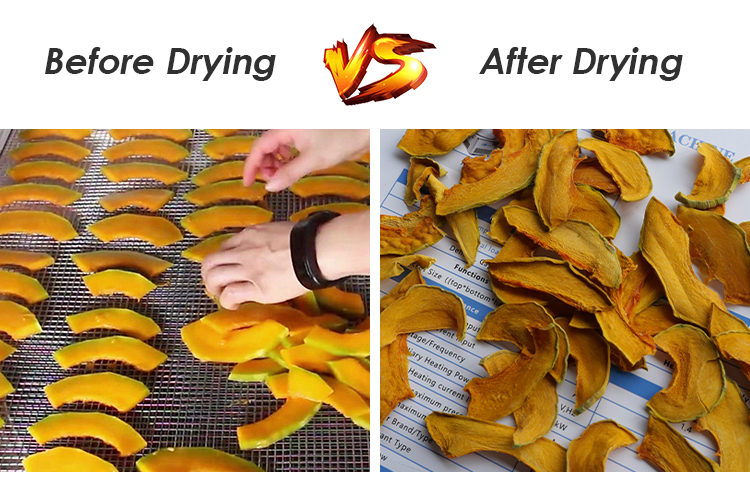
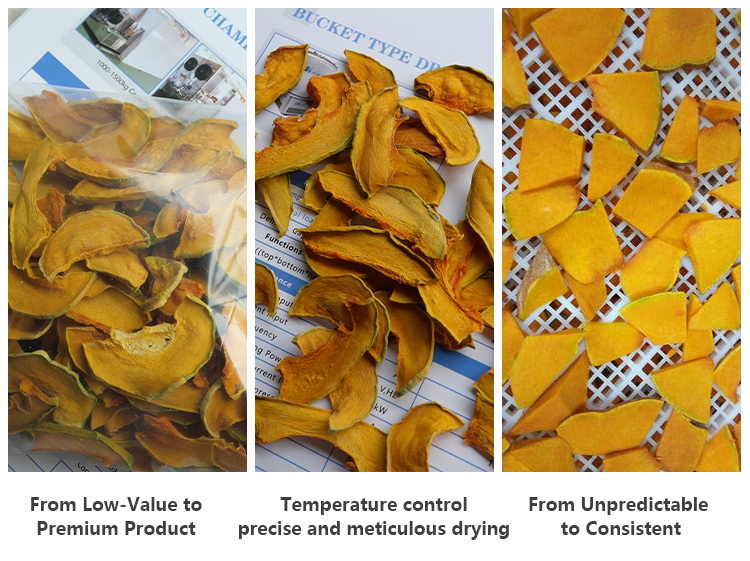
Heat pump drying: It can precisely control the low temperature range (35-45℃), effectively inhibiting the activity of polyphenol oxidase in pumpkins and avoiding browning.
The finished product exhibits a natural orange or golden yellow color.
Traditional drying/high-temperature baking: High temperatures or exposure to direct sunlight can lead to sugar caramelization and severe enzymatic browning. The finished product often appears darkened, blackened, or reddish-brown, losing its commercial appeal.
Nutrient retention:
Heat pump drying: closed-loop circulation, low-temperature dehydration, with a retention rate of over 85% for heat-sensitive carotenoids and vitamin C in pumpkin.
Traditional drying: Open high-temperature airflow leads to severe oxidative loss of nutrients, with vitamin retention rates typically below 50%.
Rehydration and taste:
Heat pump drying: Moisture escapes uniformly from the inside out, with a micro-porous tissue structure, resulting in a texture close to that of fresh pumpkin after rehydration.
Traditional drying: The surface is prone to hardening and crusting ("hard crust phenomenon"), and the internal moisture cannot escape, resulting in a burnt exterior and moist interior, which is prone to mold growth.
3. Environmental hygiene and food safety
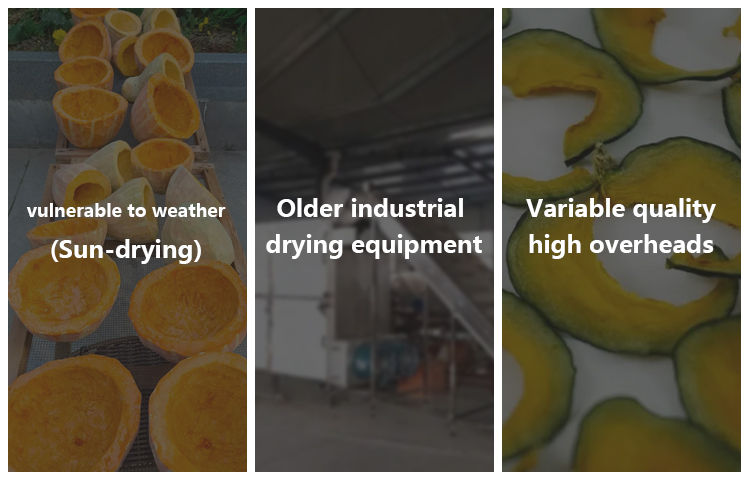
Heat pump drying: Fully enclosed box circulation, preventing external dust, flies, and PM2.5 from entering. No need to worry about sulfur fumigation or pest control,
meeting the GMP standards for exported food.
Natural drying: It heavily relies on the weather, and there is a high risk of contamination with dust, bird droppings, and pathogens in an open environment. If it rains or
is cloudy, pumpkin slices are prone to breeding aflatoxin, resulting in the scrapping of the entire batch.
Coal-fired drying: The sulfur dioxide and dust produced by combustion can adhere to the surface of pumpkins, resulting in excessive sulfur content. This not only disrupts
the flavor but also poses a food safety hazard.

 sales@aimheatpump.com
 +0086-18022011556