Blog
Language
Maximizing Productivity and Quality: The Industrial Advantages of AIM Heat Pump Food Dryers
In large-scale food processing, dehydration is not just a method—it's a critical operation that directly impacts product quality, throughput, and the bottom line. Selecting the right industrial drying technology is a strategic decision. While conventional gas-fired or electric resistance dryers have long been the industry standard, they often come with high energy costs, imprecise control, and inconsistent results. The AIM industrial heat pump food dryer represents a technological paradigm shift, engineered specifically for the rigorous demands of commercial and industrial food production. Here are the competitive advantages that make it an essential asset for modern processing facilities.
🍅Step 1: Preliminary preparation
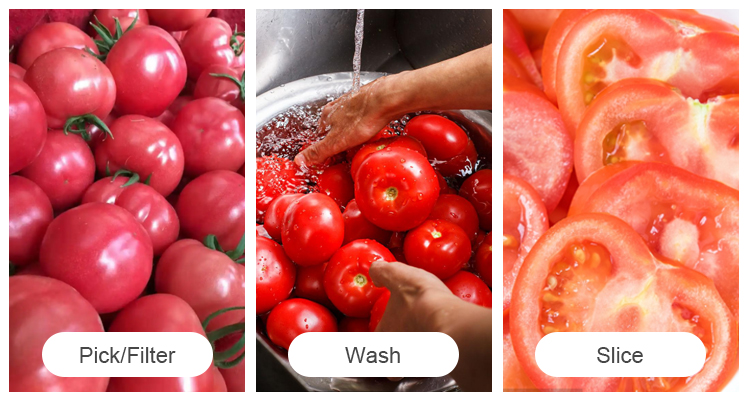
1.Selection and cleaning: Choose fresh, ripe, and high-quality tomatoes to wash and remove surface dirt. This step is directly related to the quality of the finished product, so please be careful.
2.Slicing and handling: Depending on the size of the tomatoes and personal preference, cut them into 6-8 mm thick slices, or cut into 4 cloves (small ones can be cut in half), ensuring that each piece is similar in size to ensure even drying. If you want to speed up drying, you can choose to peel it.
3.(Optional) Flavor treatment: If you want to make the finished product more vivid in color and more unique in flavor, you can carry out the following treatments before drying:
4.Hot blanching: Boil in boiling water for 1 minute to brighten the color and shorten the drying time.
5.Candied pickling: Soaked in 30% sugar water for 24 hours to make sweet and sour dried tomatoes
⚙️ Step 2: Detailed explanation of the whole process of drying
💡 AIM heat pump dryer operation characteristics
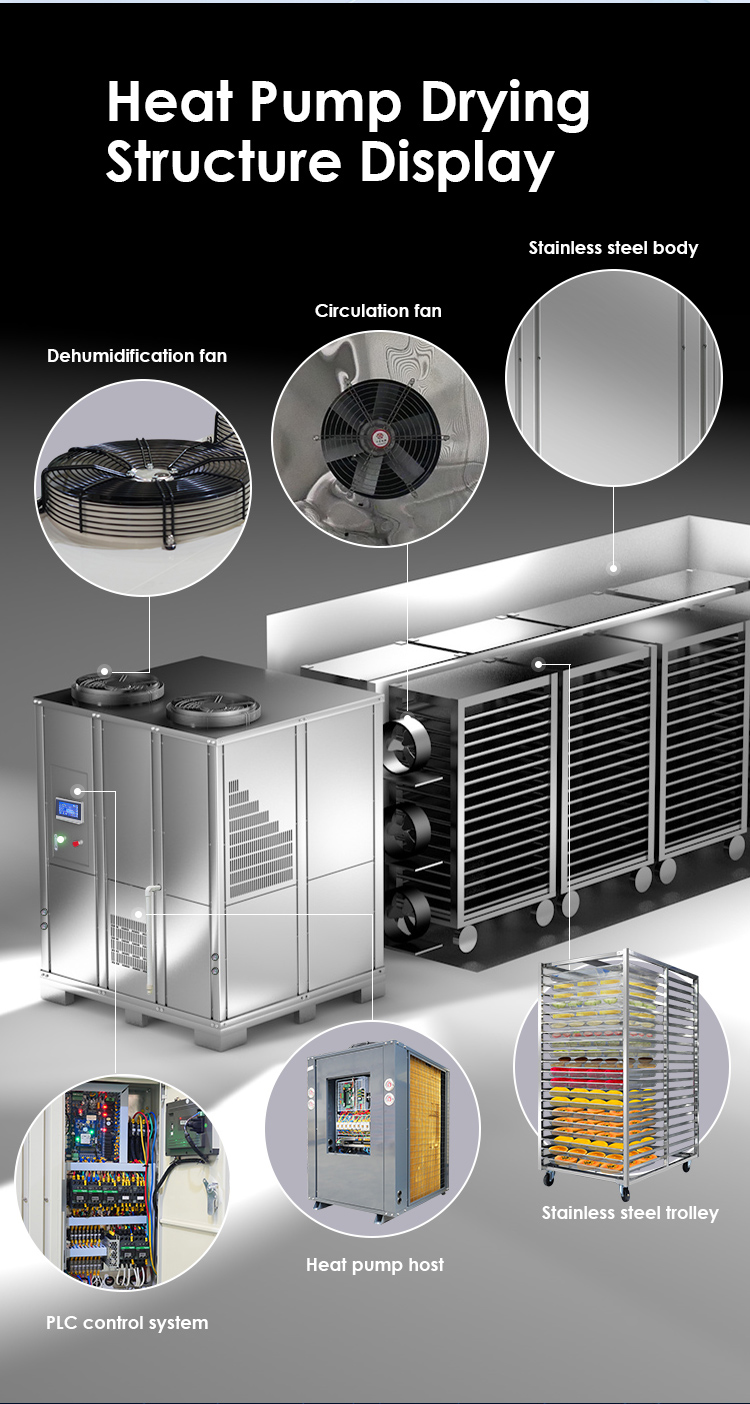
Depending on the AIM heat pump dryer you use, its core advantage is the switching between open-loop and closed-loop modes, which is also the key to energy saving and quality assurance.
Closed-loop mode: heat circulates inside the machine, which is more energy efficient and suitable for when there is a lot of moisture in the early drying stage.
Open-loop mode: Introduce outside air to strongly remove moisture, suitable for when there is less moisture in the later stage of drying.
📊 Parameters and steps
The following are the recommended drying process parameters and detailed steps for your reference.
Phase Target temperature Relative humidity (RH) duration Operation steps and key points
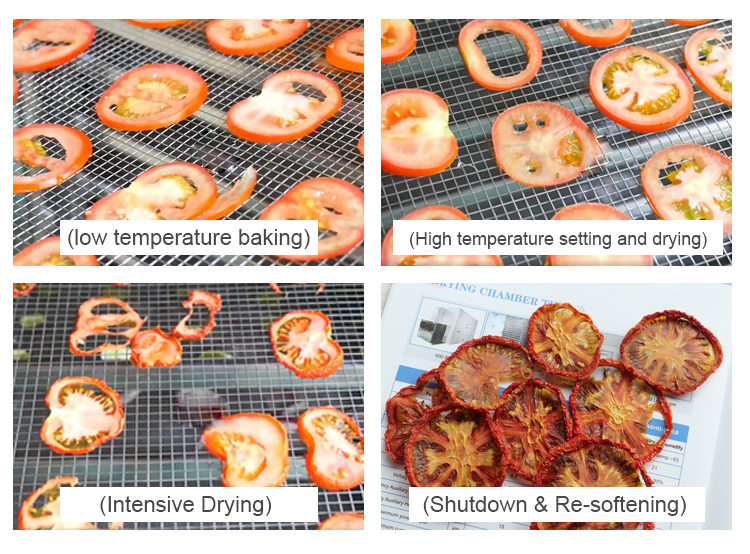
Stage 1 40-50°C controlled humidity 2-3 hours avoid surface hardening of tomatoes caused by high temperatures
(low temperature baking)
Stage 2 60-65°C <15% 8-10 hours quickly remove the moisture inside the tomato
(High temperature setting and drying)
Stage 3 65°C <10% until completion finished product meets the storage standard
(Intensive Drying)
Finishing Shutdown Cooling - 30 minutes - 1 hour make the humidity inside and outside even
(Shutdown & Re-softening)
AIM machine setup
Stage 1 - High Humidity Stage: Use closed-loop mode with temperature set at 40-50°C.
Stages 2 & 3 - High Temperature and Intensive Drying Stage: Switch to open loop mode and set the temperature at 60-65°C.
Plating and flipping
Lay the processed tomato slices or pieces flat on the drying tray in a single layer, leaving enough gaps between each piece to ensure air circulation.
After the end of stage 1, check and turn the tomatoes once to ensure even heating.
Judgment criteria
The dried finished product should be dry and tough to the touch, but not hard or brittle, and feel elastic when broken by hand, without obvious moisture.
The drying time is not fixed, but can be stopped when the dried tomatoes reach the above state due to the thickness of the slices, environmental humidity, etc

 sales@aimheatpump.com
 +0086-18022011556