Blog
Language
For commercial food processors, achieving consistent, high-quality dried onion products while controlling operational costs is a major challenge. Traditional drying methods often lead to uneven dehydration, significant nutrient and color loss, and high energy waste, directly impacting profitability and product marketability.
This overview demonstrates the transformative impact of AIM Industrial Food Heat Pump Dehydrators on onion drying. Unlike conventional systems, AIM's advanced heat pump technology delivers precise, low-temperature drying in a controlled environment. This process is engineered to preserve the natural color, potent flavor, and nutritional integrity of onions far more effectively.
The results are clear and measurable: a dramatic reduction in waste from over-drying or spoilage, and a substantial improvement in final product quality. By leveraging this energy-efficient solution, processors can achieve a superior, uniform product batch after batch, while significantly lowering energy consumption and operational costs. Discover how AIM's industrial-grade systems provide a smarter, more sustainable, and more profitable approach to onion dehydration for modern food production.
From Field to Flavor: A Visual & Quality Analysis of Modern Onion Dehydration
Explore a detailed onion drying comparison that highlights how advanced heat pump technology delivers superior color, flavor,
and nutrient retention while slashing waste and energy costs for industrial and commercial food processing.

For producers and processors in the onion dehydration industry, the journey from raw bulb to stable, shelf-ready
ingredient is fraught with challenges. The end goal is clear: to preserve the vibrant color, potent flavor, and essential
nutrients of the onion while achieving perfect, uniform dryness. Yet, traditional drying methods often fall short, leading
to inconsistent quality, high waste, and significant energy expenditure.
This article presents a clear before and after comparison, not just of appearance, but of overall value, when modern i
ndustrial food heat pump technology is applied to the onion drying process.
The "Before": Challenges of Conventional Onion Drying
Traditional hot-air or high-heat drying systems can be harsh on delicate food structures like onions. Common outcomes include:
Color Degradation: Bright whites and purples turn brownish or dull, reducing visual appeal and perceived quality.
Flavor and Nutrient Loss: Excessive heat can drive off volatile aromatic compounds and degrade heat-sensitive nutrients.
Inconsistent Results: Uneven drying leads to a mixed batch where some pieces are overdried (brittle and burnt-tasting) while
others retain moisture, creating a risk for mold and spoilage.
High Operational Costs: Inefficient heat generation and poor moisture extraction translate to high energy consumption and
a larger carbon footprint.
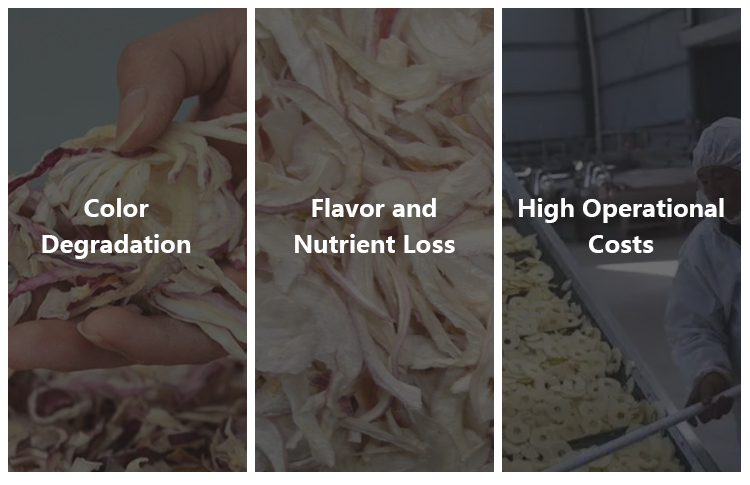
These factors directly impact profitability through product rejection, waste, and higher utility bills.
The "After": Transformation with Precision Drying Technology
The shift to a purpose-built industrial food dehydrator utilizing heat pump technology represents a paradigm shift.
Here’s what changes:
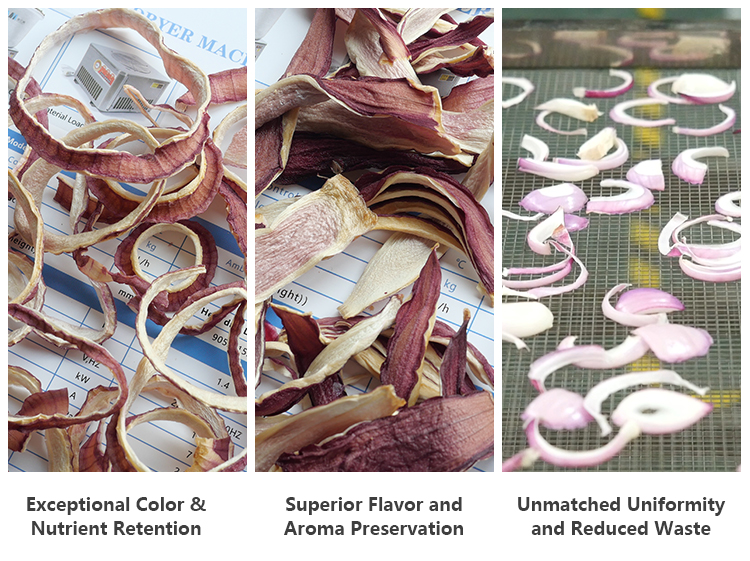
1. Exceptional Color & Nutrient Retention:
The core advantage of heat pump technology for food dehydration is its ability to operate at precisely controlled,
lower temperatures in a dehumidified environment. This gentle process prevents the caramelization and browning
that damage onions. The result? Dried onions that retain their distinct creamy-white or deep purple hues, look more
natural, and command a higher market price.
2. Superior Flavor and Aroma Preservation:
By avoiding thermal shock, the gentle drying cycle locks in the onion's essential oils and sulfur compounds responsible
for its signature pungency and sweetness. The finished product offers a more potent, complex flavor profile compared
to its conventionally-dried counterpart.
3. Unmatched Uniformity and Reduced Waste:
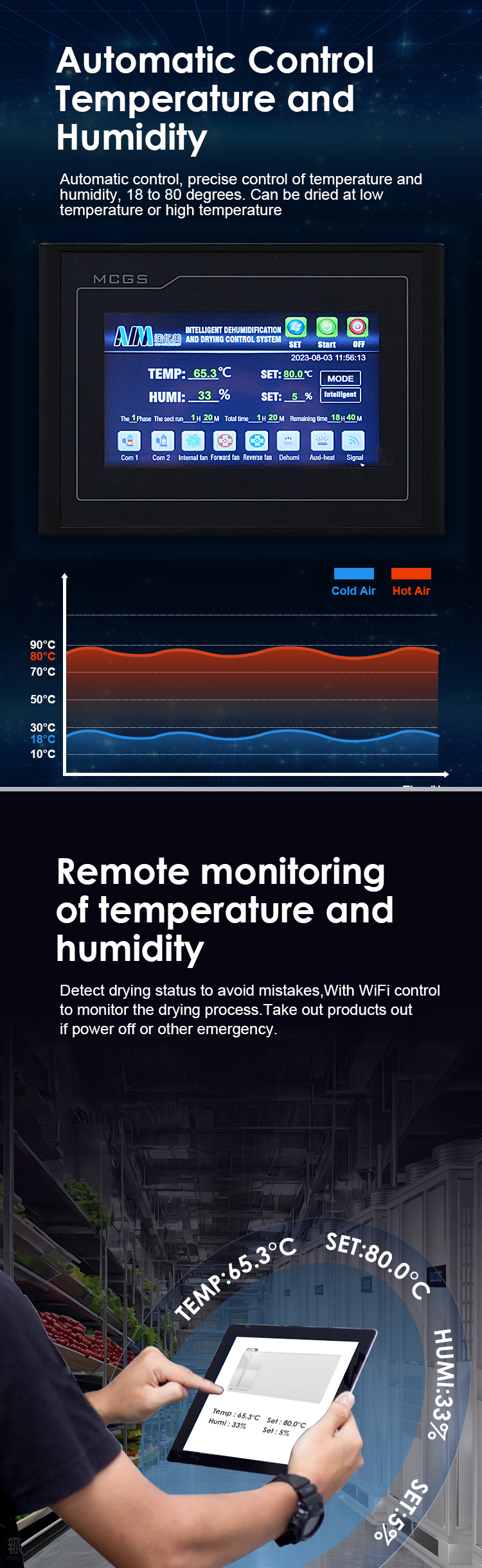
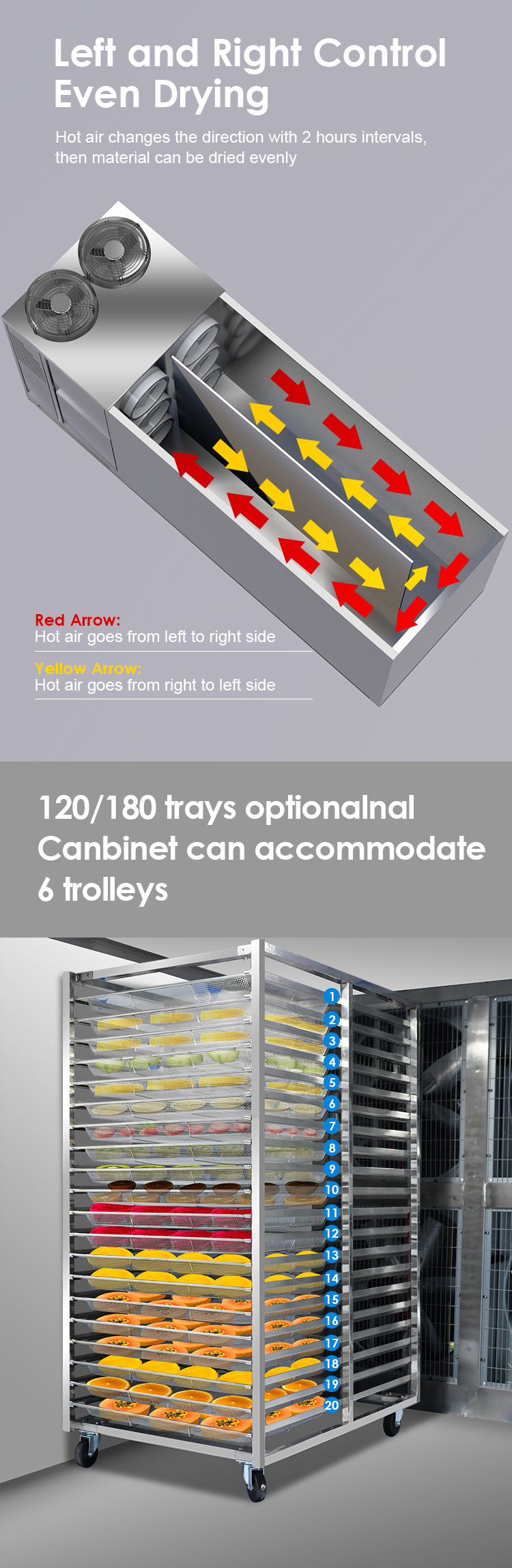
Precise control over airflow, temperature, and humidity ensures every slice in the batch dries at the same rate. This drying
efficiency eliminates moist spots and over-dried edges, producing a uniformly brittle texture perfect for grinding or
packaging. This consistency is key to reducing post-processing waste significantly.
The Engine of Efficiency: How the Right Technology Delivers Results
The visible improvements in the onion product are driven by the inherent advantages of the AIM industrial food heat pump dryer:
High Efficiency & Low Energy Consumption: The heat pump recycles thermal energy within the chamber, using
significantly less electricity than traditional heaters to remove the same amount of moisture. This energy-efficient
dehydration process directly lowers operating costs.
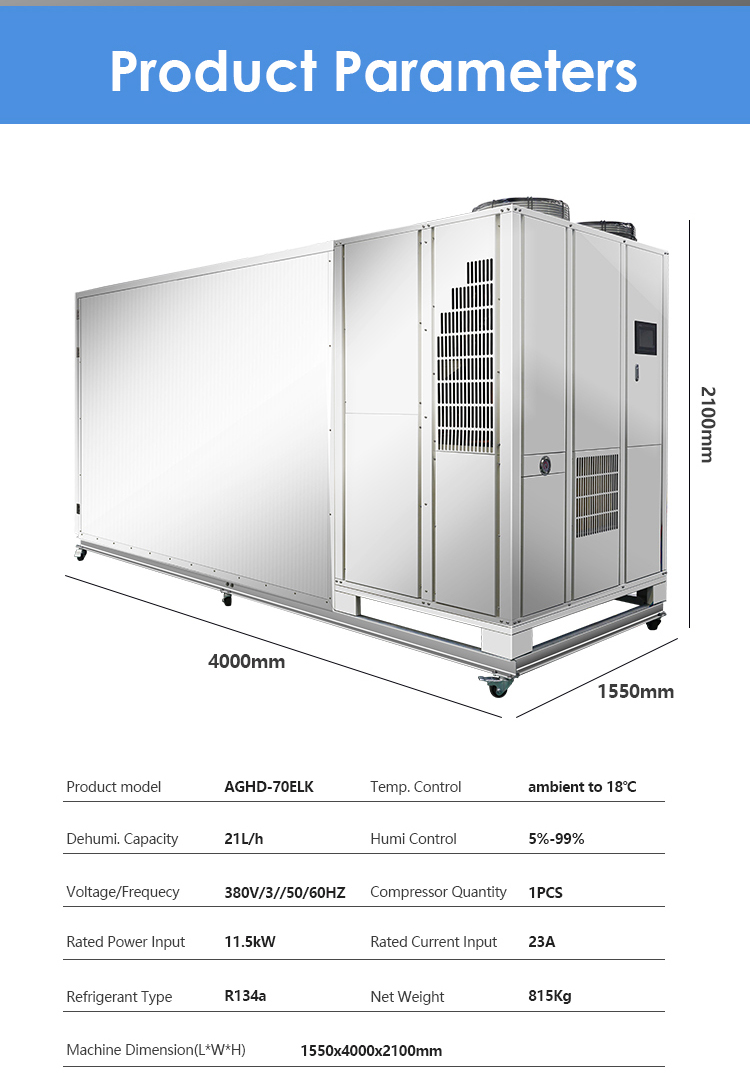
Capacity for Scale: With the capability to process up to 700kg per batch, this system is engineered for commercial
and industrial-scale food production. It meets the high-volume demands of agricultural cooperatives, large-scale
food processors, and spice manufacturers.
A Solution for Diverse Needs: Whether for industrial food processing, commercial kitchen operations, or large
agricultural post-harvest management, this technology scales to meet the need for quality and volume.
Conclusion: More Than Just Drying—Preserving Value
The onion drying comparison clearly shows that the choice of technology is not merely a manufacturing step;
it's a critical business decision that affects product quality, operational cost, and environmental impact. Moving
from traditional methods to advanced heat pump-based dehydration allows businesses to transform a basic
commodity into a premium, consistent ingredient.
For operations looking to improve final product quality, reduce energy costs, and achieve a reliable, high-output
drying process, the evidence points toward the adoption of modern, efficient industrial food drying solutions.
It’s an investment that pays dividends in the quality of the product leaving your facility and the sustainability
of your operation.

 sales@aimheatpump.com
 +0086-18022011556