Info Center
Language
Complete Drying Process Guide for High-Quality Roselle Flower Processing
Introduction
Roselle flower (Hibiscus sabdariffa), also known as hibiscus or roselle calyx, is widely used in herbal tea, beverage production, jam, and natural health products.
Its market value depends heavily on color intensity, acidity retention, and nutritional content.
Improper drying can easily lead to:
Dark brown or black color
Loss of vitamin C and anthocyanins
Weak sour flavor
Mold risk due to high moisture
The AIM industrial heat pump food dryer provides a stable, energy-efficient, and hygienic drying solution designed for commercial roselle flower drying and
export-grade production.
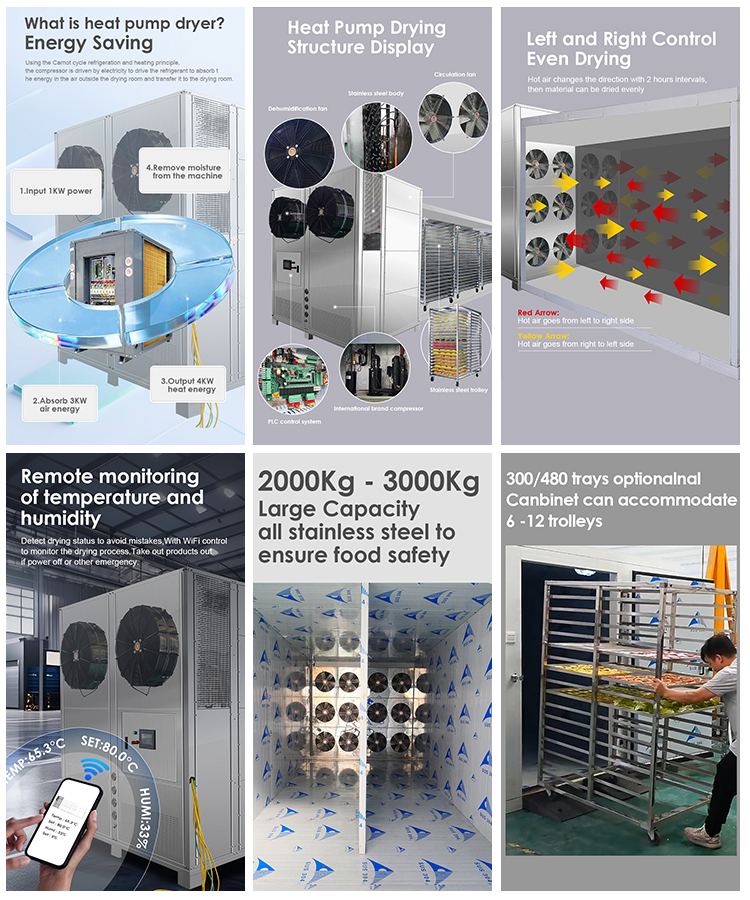
Why Use AIM Industrial Heat Pump Food Dryer for Roselle?
The AIM system uses advanced heat pump technology to create a low-temperature, closed-loop drying environment,
ideal for heat-sensitive agricultural products like roselle.
Key Benefits:
✔ Low temperature drying (30–60°C)
✔ High color and nutrient retention
✔ Uniform industrial airflow system
✔ PLC intelligent control panel
✔ Energy-saving heat pump technology
✔ Clean, dust-free drying environment
--------------------------------------------------------------------------------------------------------------------------------------------------------------------------------------------
Step-by-Step Roselle Flower Drying Process (AIM Industrial Dryer)
Step 1: Raw Material Selection
Select high-quality fresh roselle calyx:
Deep red and fully matured calyx
No mold, damage, or insect spots
Uniform size for consistent drying
👉 Freshness directly affects final color and taste quality.
--------------------------------------------------------------------------------------------------------------------------------------------------------------------------------------------
Step 2: Cleaning and Pre-Treatment
Before drying:
Remove stems, leaves, and impurities
Rinse lightly if necessary (avoid soaking)
Drain excess surface water
Pre-air dry for 1–2 hours in a ventilated area
This step helps reduce drying load and improves efficiency.
--------------------------------------------------------------------------------------------------------------------------------------------------------------------------------------------
Step 3: Loading into AIM Industrial Heat Pump Dryer
Proper loading is essential for uniform drying:
Spread roselle evenly on trays
Avoid overlapping calyx pieces
Keep space for hot air circulation
Ensure balanced tray distribution
👉 Correct loading = stable drying quality.
--------------------------------------------------------------------------------------------------------------------------------------------------------------------------------------------
Step 4: Set Drying Parameters (PLC Control System)
Recommended industrial settings for roselle drying:
Stage 1: Pre-drying
Temperature: 35–40°C
Duration: 2–3 hours
Purpose: gentle moisture removal
Stage 2: Main drying
Temperature: 45–50°C
Duration: 4–6 hours
Purpose: core dehydration process
Stage 3: Final drying
Temperature: 50–55°C
Duration: 1–2 hours
Purpose: moisture stabilization
✔ Total drying time: 6–10 hours (depends on thickness & load)
--------------------------------------------------------------------------------------------------------------------------------------------------------------------------------------------
Step 5: Heat Pump Drying Operation
During operation, the AIM system works automatically:
1.Absorbs ambient heat energy
2.Converts it into stable drying heat
3.Circulates uniform hot air inside chamber
4.Continuously removes moisture
5.Maintains low-temperature protection for nutrients
This ensures roselle retains:
Bright red natural color
High anthocyanin content
Strong sour flavor
Clean herbal quality
--------------------------------------------------------------------------------------------------------------------------------------------------------------------------------------------
Step 6: Cooling Process
After drying is completed:
Allow roselle to cool inside the machine
Prevent moisture re-absorption from air
Avoid immediate packaging while hot
Cooling helps stabilize final product quality.
--------------------------------------------------------------------------------------------------------------------------------------------------------------------------------------------
Step 7: Packaging and Storage
For commercial and export use:
Use moisture-proof sealed packaging
Vacuum packaging is recommended
Store in cool, dry, and dark environment
Label batches for traceability
Proper packaging ensures long shelf life and export compliance.
--------------------------------------------------------------------------------------------------------------------------------------------------------------------------------------------
Applications of Dried Roselle Flowers
Roselle processed with AIM drying technology is widely used in:
Herbal roselle tea production
Beverage and juice industry
Natural food coloring extraction
Jam and syrup processing
Nutritional supplements
Export herbal products
--------------------------------------------------------------------------------------------------------------------------------------------------------------------------------------------
Why Choose AIM Industrial Heat Pump Food Dryer?
The AIM system is designed for industrial-scale herbal and food dehydration.
Advantages:
High capacity industrial design
Stable batch-to-batch drying quality
Energy-saving heat pump system
PLC intelligent automation control
Hygienic closed drying chamber
Long-term continuous operation
It is ideal for roselle processors, tea factories, and export manufacturers.
--------------------------------------------------------------------------------------------------------------------------------------------------------------------------------------------
Conclusion
Roselle flower drying requires precise temperature control to preserve its color, acidity, and nutritional value. The AIM industrial heat pump food dryer provides a reliable, energy-efficient, and industrial-grade solution for high-quality roselle processing.
By using a controlled low-temperature drying process, manufacturers can achieve premium-grade dried hibiscus sabdariffa suitable for global herbal tea and beverage markets.

 sales@aimheatpump.com
 +0086-18022011556