Blog
Language
Product Overview: Industrial 100kg Pear Dehydrator
Maximize your harvest with our Commercial 100kg Fruit Dryer, engineered for processors who demand power, performance, and low operating costs.
Massive 100kg Capacity: Built for high-volume production, allowing you to process large batches of pears (and other fruits) efficiently to meet wholesale demands.
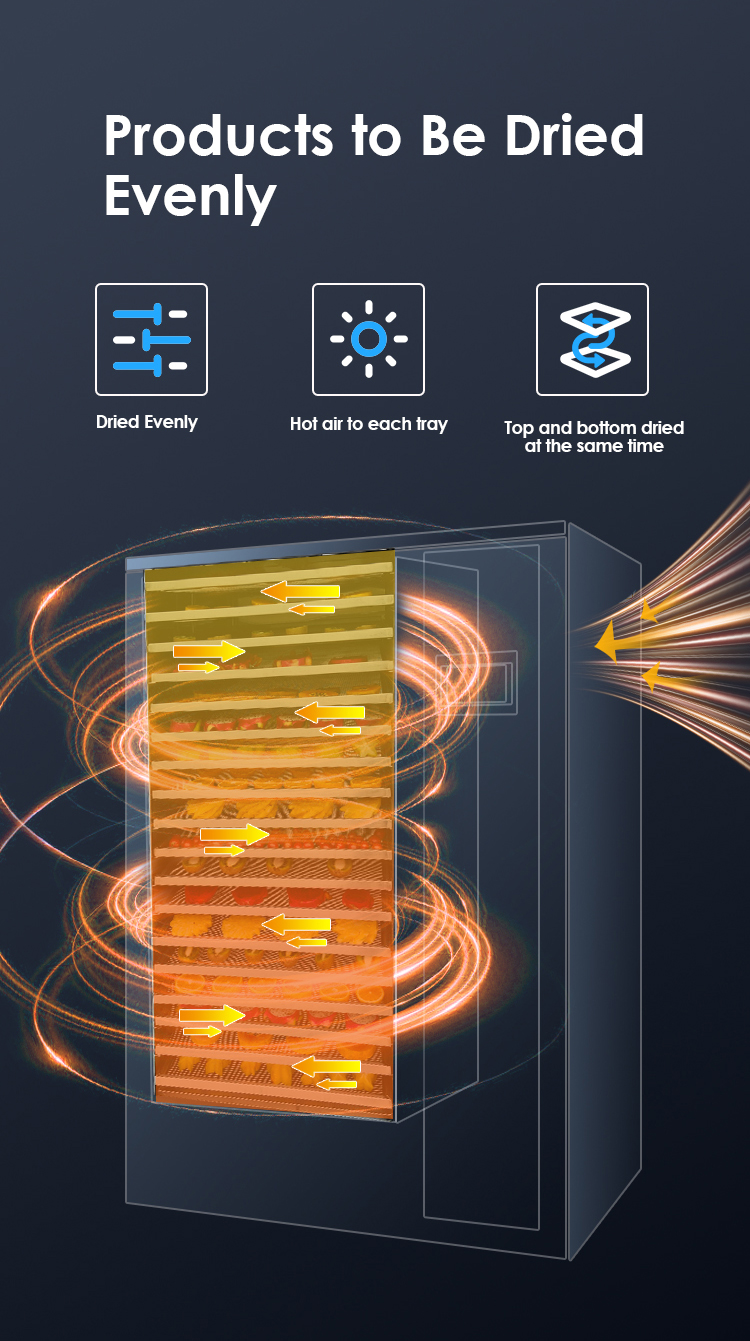
Industrial-Grade Efficiency: Features advanced air circulation and thermostat control to ensure even drying at high speeds, reducing drying time by up to 30% compared to standard units.
Ultra Energy-Saving: Designed with a high-efficiency heating system and superior insulation to minimize power consumption, significantly lowering your electricity bills without compromising on output.
Robust & Hygienic: Constructed from food-grade stainless steel, ensuring durability in harsh working environments and compliance with commercial food safety standards.
Industrial Heat Pump vs. Sun Drying: Why Modern Dehydrators Are Revolutionizing Food Processing
For centuries, sun drying has been the go-to method for preserving fruits like pears. While this traditional technique has its place, today's industrial food processing operations demand efficiency, consistency, and scale. Enter the industrial heat pump dehydrator—a game-changing technology that outperforms traditional methods in every meaningful metric.
In this article, we'll compare traditional sun drying with modern heat pump drying technology, focusing on why 100kg large capacity industrial dehydrators are the superior choice for businesses seeking energy-efficient, durable, and high-volume drying solutions.
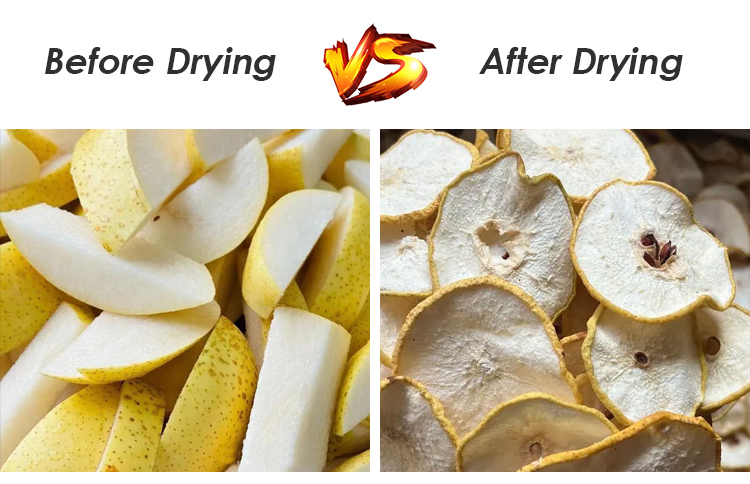
The Limitations of Traditional Sun Drying
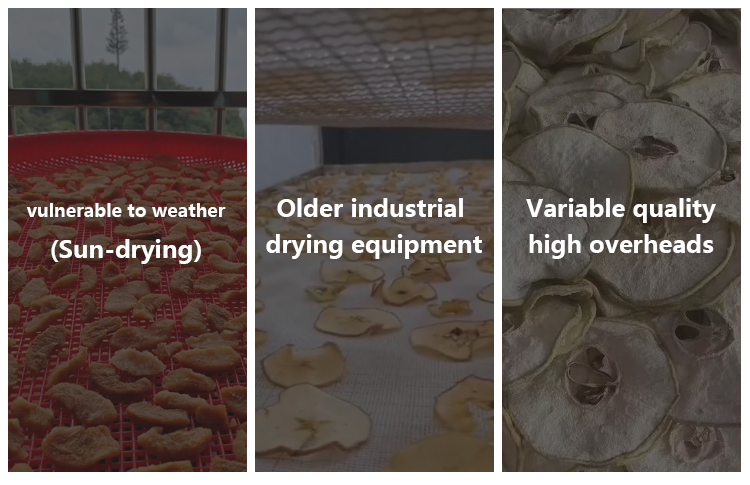
Sun drying harnesses solar energy to remove moisture from produce—a method that has served humanity for millennia. However, for commercial applications, its drawbacks are significant .
Weather Dependency and Inconsistency
Traditional sun drying is entirely at the mercy of weather conditions. Cloudy days, high humidity, or unexpected rain can halt production entirely, leading to spoilage and financial losses. Studies comparing direct solar dryer systems (DSDS) with modern alternatives have found that sun drying takes significantly longer and produces inconsistent results .
Slow Processing Times
Research on banana drying demonstrated that sun drying required 720 minutes to achieve target moisture levels—nearly three times longer than heat pump drying . For commercial pear processors, this translates to severe bottlenecks and limited throughput.
Quality and Hygiene Concerns
Open-air drying exposes produce to dust, insects, and microbial contamination. Temperature fluctuations can cause case hardening—where the outer layer dries too quickly, trapping moisture inside and leading to spoilage . Color degradation and nutrient loss are also common with uncontrolled sun exposure.
Labor-Intensive Operations
Sun drying requires constant monitoring, manual turning of produce, and protection from elements—labor costs that add up quickly in commercial settings.
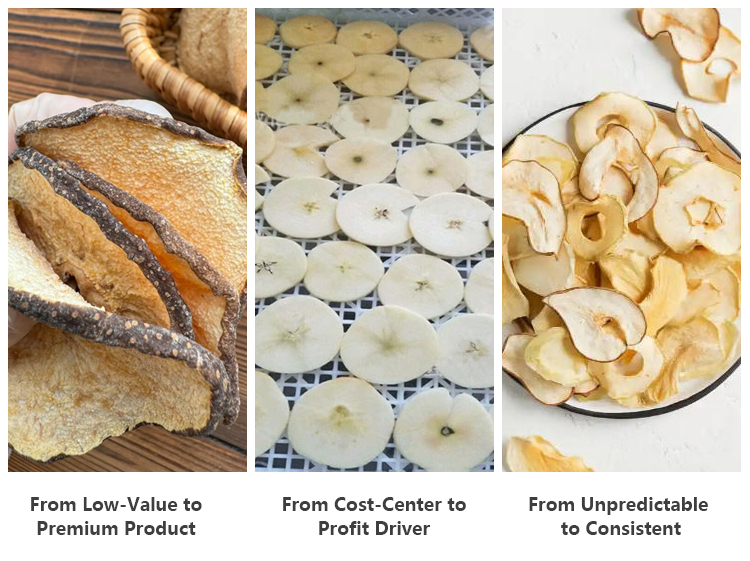
Heat Pump Drying Technology: A Superior Alternative
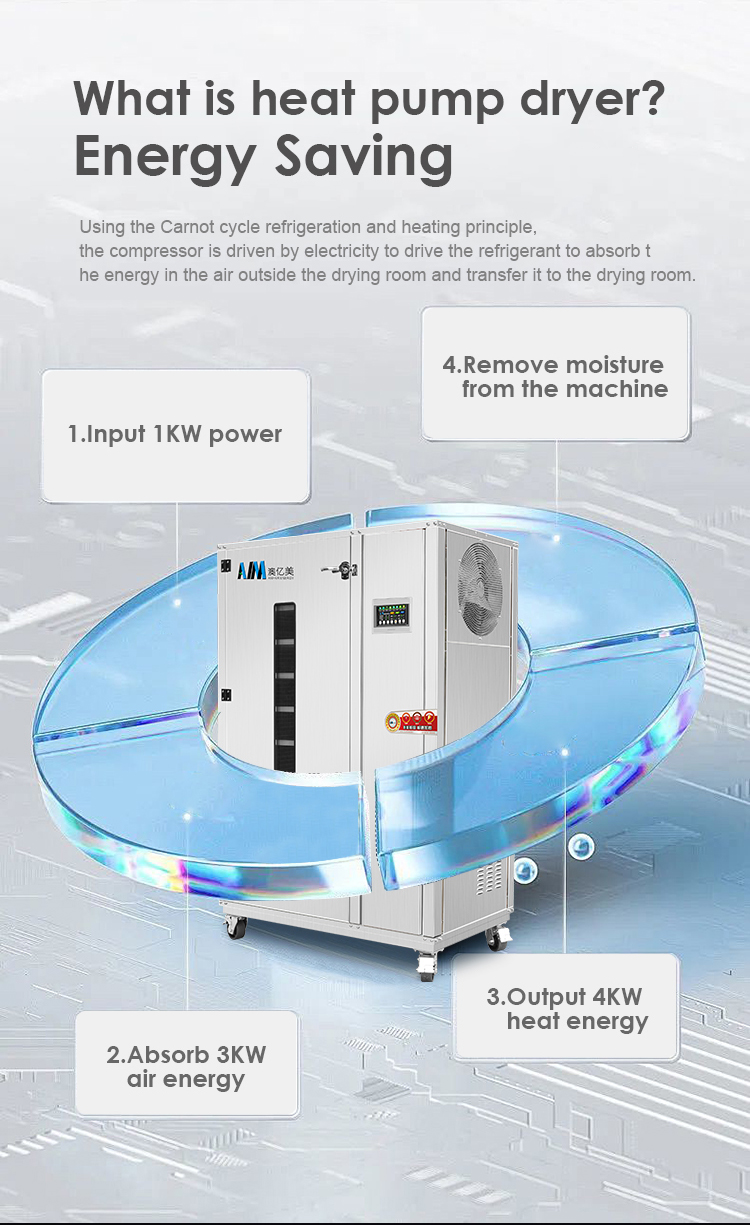
Heat pump dehydrators operate on an entirely different principle. Instead of relying on external conditions, these systems use a refrigeration cycle to extract moisture from air while recycling heat in a closed-loop system .
How Heat Pump Drying Works
A heat pump dryer recirculates air through a carefully controlled environment. Moist air passes over an evaporator coil, where condensation removes water. The now-dry air is reheated and returned to the drying chamber. This closed-loop design achieves something sun drying cannot: precise control over temperature and humidity .
Proven Performance Advantages
The data speaks for itself. Comparative studies show that closed-loop heat pump dryers (CLHPD) achieve:
Drying time reduction: Heat pump drying with preheating completed in 255 minutes versus 720 minutes for sun drying—nearly 2.8 times faster
Energy efficiency: The Specific Moisture Extraction Rate (SMER) for heat pump drying reached 1.29 kg/kWh compared to just 0.35 kg/kWh for sun drying
Coefficient of Performance (COP): Modern industrial heat pump dryers achieve COP values between 3.5 and 4.5, meaning they deliver 3.5–4.5 times more drying energy than the electrical energy consumed
Why Choose a 100kg Large Capacity Industrial Heat Pump Dehydrator?
For businesses serious about scaling production, 100kg food dehydrators represent the sweet spot between capacity and operational efficiency .
Massive Batch Processing
A 100kg large capacity unit processes what would take weeks of sun drying in a single day. Multi-tiered tray systems maximize space utilization, with industrial models featuring 96+ trays for simultaneous high-volume processing .
Unmatched Energy Efficiency
Heat pump technology is inherently energy-saving. By recycling heat rather than venting it, these systems consume up to 50–60% less energy than conventional electric dryers . For pear processors running continuous operations, this translates to thousands of dollars in annual electricity savings.
Precise Environmental Control
Advanced models feature digital temperature controls (typically 30–70°C range) and humidity sensors that automatically adjust airflow . This precision ensures:
Consistent moisture content across every batch
Preservation of natural color, flavor, and nutrients
Prevention of microbial growth
No case hardening or over-drying
Industrial-Grade Durability
Unlike makeshift sun drying setups, industrial dehydrators are built for continuous 24/7 operation. Key durability features include :
304-grade stainless steel construction—corrosion-resistant and hygienic
Food-safe materials compliant with HACCP and FDA standards
Robust fans and compressors rated for years of continuous use
Sealed insulation that maintains efficiency in all climates
Adaptability Across Seasons
Sun drying is seasonal. Heat pump dehydrators operate efficiently regardless of outside weather—in rain, snow, or humidity .
This enables year-round production and consistent supply to customers.

 sales@aimheatpump.com
 +0086-18022011556